For professional sports organizations
The mental edge, across an entire squad
Clubs, federations and tournaments optimize mental performance across a whole squad, with testing and training integrating into physical practice rather than competing with it for time.
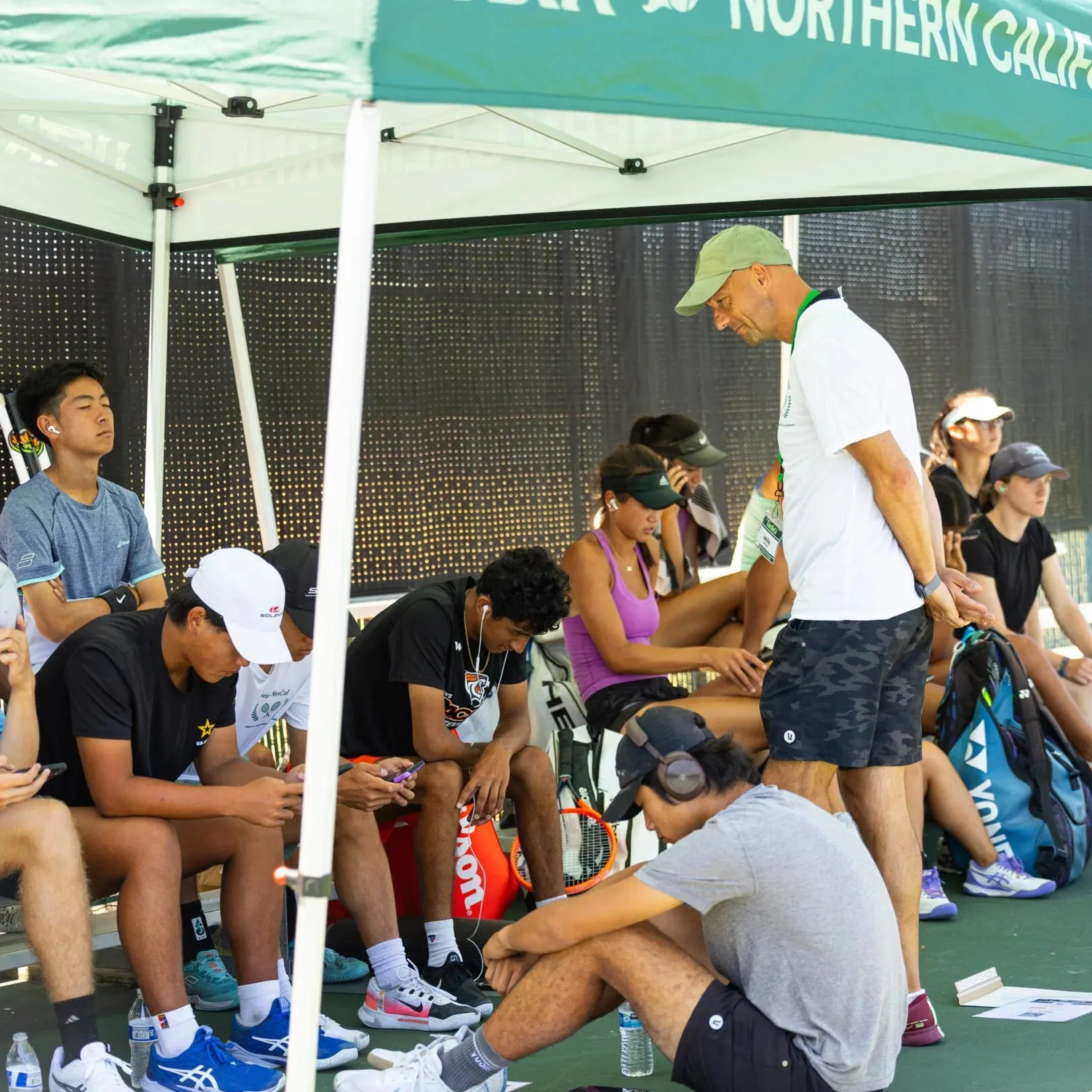
Proof
Three example partnerships at organization level rather than with individual athletes — a platform, a tournament, and a college squad.
-
UTR Sports
Discounted access for UTR members, and a program at UTR Pro events where aspiring professional players can use the app’s routine tools free of charge for the duration of a tournament.
-
Dutch Open ATP
All participating professional tournament players receive complimentary access to progressing preparation and recovery routines, delivered through audio guides in the app’s PRO Zone.
-
MIT
A mental performance program run with the men’s tennis team — the squad rather than individual athletes. From mental skill development to building performance routines that work under pressure.
Ways organizations deploy it
-
Squad program
THRIVE and GRIT pathways across a group, integrated into existing physical training rather than added alongside it.
-
Event deployment
Mental preparation and recovery resources at a tournament or camp that integrate into existing schedules without adding time.
-
Staff enablement
Work with your S&C coaches, psychologists and team coaches so mental training is part of the plan rather than a parallel activity.
What each role gets
Mental performance only works at squad scale when it fits what each person is already doing.
-
Performance directors
Empower all performance staff, see athletes thrive through preventative training, and reduce burden and cost.
-
Athletes
Use a mental fitness solution that trains mental skills in a way that works under pressure.
-
Strength & conditioning coaches
Integrate mind flows seamlessly into sport-specific conditioning, with no extra time investment.
-
Performance psychologists
Leverage mental fitness analytics and mentored app training to direct your efforts efficiently across a squad.
-
Team coaches
Work with focused athletes who actively test and train their mental edge and integrate their mental routines into the work you give them.
-
Clinical psychologists
Experience a reduced burden as preventative mental fitness training becomes a habitual practice.
I really love how the 2Mynds approach integrates mental and physical training. No extra sessions. No distractions. Just better returns on the work we already planned to do!
 David Hagymas — Head Coach, MIT Men’s Tennis
Confidentiality
What the organization sees, and who decides
Data confidentiality is chosen by each individual and can be adjusted per squad. This ensures optimal flexibility in what data is shared or not.
-
Squad-level patterns
Aggregate trends across a group — enough to direct staff attention and plan around a season, without exposing any individual.
-
Participation and engagement
Whether the program is being used, at the cadence it expects. The practical question a performance director actually has.
-
Individual results — confidential or shared
Set per squad. An athlete’s results travel only with that athlete’s agreement, and reporting can be switched off for a group entirely.
Questions organizations ask
› What does the organization get to see about individual athletes?
That is decided when the program is set up, and it varies. Some squads run fully confidential — the organization sees squad-level patterns and participation, and nothing individual. Others agree that individual results are shared with named staff. What does not vary is who decides for a given athlete: the team chooses the arrangement, and an athlete’s own results travel only with that athlete’s agreement. Reporting can also be switched off for a group entirely.
› Does this replace our performance psychologist?
No. It is training rather than consultation, and it complements psychological support rather than substituting for it. Performance psychologists typically use the group-level analytics to direct their own attention across a squad.
› How much time does it take from training?
The mental workouts integrate into the cooldown of physical sessions rather than requiring separate time. That is the design constraint the whole method was built around.
› Can we run this for a single event rather than a season?
Yes. At the Dutch Open ATP all participating players receive complimentary access to the PRO Zone for the tournament — preparation and recovery routines that work without replacing any existing practice.
› What does it cost?
Organization engagements are quoted individually — squad size, duration and the level of coaching involvement vary too much for a list price to be useful.
Looking for corporate teams rather than sport? See mental performance for executives.