For junior performers, and their parents
Performing under pressure is a skill. Train it early
Young people who perform — in sport, on a stage, in an exam hall — are asked to deliver in moments that do not wait. That capacity can be trained, and it is better trained early.

Who this is for
-
Young athletes
Juniors competing at a level where the difference between practice and competition is mental, not physical.
-
Performing artists
Musicians, dancers and actors who have to deliver on the day, in front of people, with no second take.
-
Students under pressure
Exams, auditions and trials — the same skills apply wherever performance is judged in a single moment.
How it works
Eight minutes, incorporated into training that’s already planned
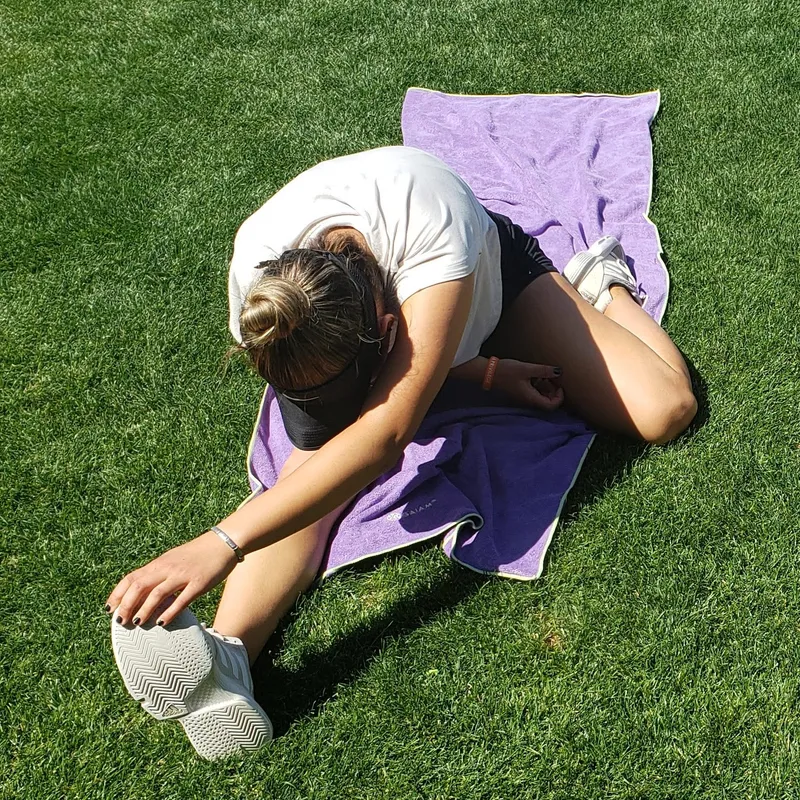
Mental workouts integrate into the cooldown of physical training rather than competing with it. For juniors already balancing school, training and a social life, that difference is the whole thing.
A session looks like this
- Pick a skill flow from the playlist and put headphones in.
- Start it as the warm-up begins.
- Train or compete — whatever gets the adrenaline going and the heart rate up.
- Run the same flow again in the cool-down, so the skills get practiced under a different physiology.
Two pathways
What the program does, week by week
Both pathways are the same for every performer — what changes is the pressure situation being trained for. For a junior that is the trial, the audition, or the match that counts. THRIVE is where everyone starts, and GRIT continues it.
-
THRIVE
Start · 12 weeks
The starting point for everyone.
-
Week 1–2
Learn 2 coaching sessions
Onboarding, the intro course, and your mental edge profile in the SPECs Masterclass.
-
Week 3–8
Build 4 coaching sessions
The Skills Masterclass, then six weeks of training your core mental skills.
-
Week 9–12
Apply 4 coaching sessions
A deep dive into one skill, the Routines Masterclass, and your edge report.
-
-
GRIT
Sustain · 6+ months
Long-term, with personalized targets.
-
Week 1
Plan 1 coaching session
Update your edge profile, set targets, and build your long-term plan in the GRIT Masterclass.
-
Week 2–7
Advance 2+ coaching sessions
An intermediate mental workout program, with weekly training on skills and routines.
-
Monthly
Optimize Flexible coaching
Deep dives and routine scripting, adjusted as your needs change.
-
What a junior gets on either pathway
-
Weekly mentoring
Between sessions, a trained mental coach messages your child every week about their training and their competitions, so the work carries on after practice ends.
-
Help around the events that count
Once a month, when it’s needed, that week’s mentoring can become a check-in before or after a match, an audition or a trial — by message, or a call of under 15 minutes.
-
You see every message
Mentoring happens in a WhatsApp group created by 2Mynds, with a parent in it from the start. You can read everything your child’s coach writes, and join any live session.
-
Live sessions and progress reports
One-on-one coaching sessions of 45 minutes, online or in person, and written progress reports: two in THRIVE, then one every quarter in GRIT, measured against the targets you set.
GRIT is set at one of four coaching rates — a session every week, every two weeks, every month or every two months — agreed with you in the consultation. It runs for a fixed term of at least six months and does not renew automatically.
For parents
Support the performance without adding to the pressure
Most parents of a young performer have felt the gap between wanting to help and knowing how. Our short course for parents is built around the four steps of the CALM approach.
I wish I had found this course sooner. Beyond being highly convincing, it is even more useful in practice. It has helped me stay calm and thrive alongside my daughter.
-
C — Check in
Understand where they actually are before responding to where you think they are.
-
A — Arrange
Set up the conditions, rather than managing the performance itself.
-
L — Let them play
Protect the space where performance is intrinsically motivated.
-
M — Mentor
Guide rather than direct — the shift that keeps you useful as they get better.
The parents short course covers these in full — US$45.
Evidenced where the pressure is highest
Training with a progressive overload is the standard for physical development of every pro athlete. It’s really time we started doing that for our mind.
 Wolf Oswald — ATP Tour Fitness Coach and Physical Therapist
The 2Mynds system is providing my students with a fun and engaging way to work on the mental skills that they need to compete at a high level.
 Nick Fustar — Head coach / Eagle Fustar Tennis Academy
The method is the same one used by professional athletes on tour. Juniors get the version built for their stage, not a diluted one.
Questions parents ask
› Is this only for sport?
No. The method was developed with athletes and most of our juniors compete in sport, but performing under pressure is the same problem in music, dance, theatre and exams. The techniques and the routines transfer.
› How much time does it take?
The mental workouts are eight minutes and are designed to integrate into the cooldown of training a young person is already doing, rather than adding another commitment to the week.
› What is my role as a parent?
Mostly not coaching. Our short course for parents is built around the CALM approach — check in, arrange, let them play, mentor — which helps you support performance without adding to the pressure.
› Can I see what the coach says to my child?
Yes. Written mentoring happens in a WhatsApp group that 2Mynds creates, and a parent is in it from the start, so you can read every message. You can also join any live session. A child under 13 takes part through a parent’s phone rather than an account of their own.
› What does it cost, and how do we pay?
THRIVE and GRIT are quoted after a consultation, because the coaching rate is agreed with you. The fee is set out in a written proposal and invoiced to the parent or guardian, and the pathway begins once it is paid. Either side can end a pathway with 30 days’ written notice, and if a GRIT term ends early, the unused balance is refunded pro rata.